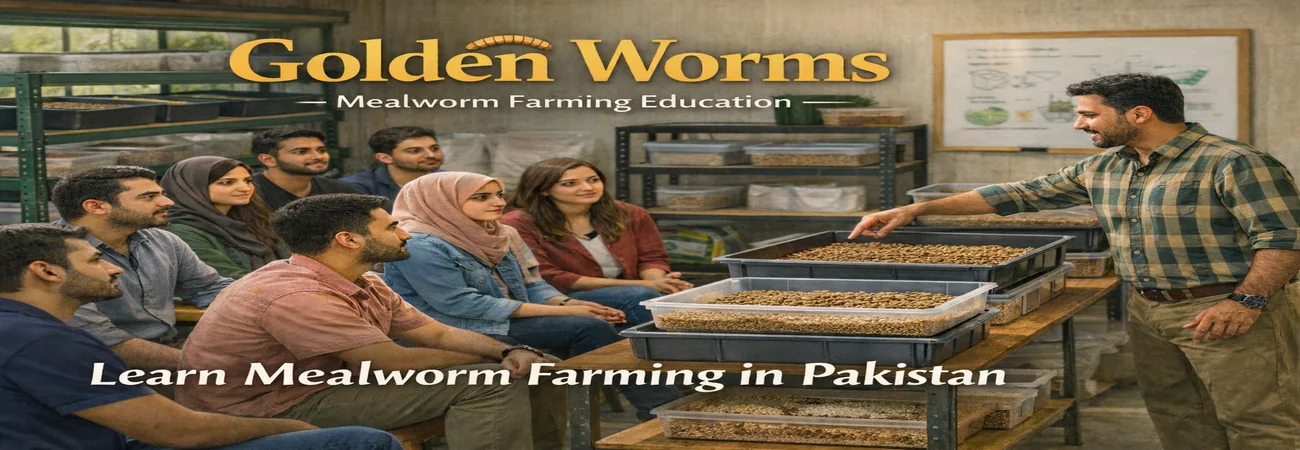
Executive Summary: The Global Protein Crisis
In the first qIn the first quarter of 2026, the global poultry and aquaculture industries face an existential threat: the skyrocketing cost of imported protein. Traditionally, Soy Meal (sourced from major exporters like Brazil/USA) and Fish Meal (harvested from depleting marine stocks) have been the backbone of feed. However, with supply chain disruptions and environmental depletion, the “Protein Gap” is widening. This analysis provides a data-driven look at how Mealworms (Tenebrio molitor) are not just a sustainable alternative, but a superior economic choice for the modern agri-entrepreneur.
Chapter 1: The Failure of the Traditional Model
1.1 The Soy Dependency
Global agriculture currently relies on land-intensive soybean monocultures. For poultry farmers, feed now accounts for 70–75% of total production costs. When global soy prices fluctuate due to climate events or trade tariffs, profit margins on commercial broilers vanish overnight.
1.2 The Fish Meal Problem
Fish meal is the primary protein for high-value aquafeed. However, overfishing has led to a sharp decline in quality and a surge in price. Furthermore, marine-sourced proteins are increasingly contaminated with heavy metals and microplastics, which accumulate in the final consumer product.
Chapter 2: Why Mealworms? The Nutritional Superpower
2.1 Complete Amino Acid Profile
Unlike plant-based proteins (Soy), mealworms contain a complete amino acid profile, including high levels of Methionine and Lysine. These are the “growth engines” for poultry. Without them, birds grow slower and consume more feed, leading to a poor Feed Conversion Ratio (FCR).
2.2 The Immune-Boosting Lipid Advantage
Mealworms provide high-quality fats (Lauric acid) which naturally boost the immune system of livestock. This reduces the dependency on expensive antibiotics—a critical cost-saving factor in modern organic farming.
Chapter 3: The Economic Mathematics – A 2026 Cost-Benefit Analysis
To demonstrate the shift, let’s analyze a medium-scale broiler operation with 5,000 birds over a standard 35–42 day cycle using global average pricing.
3.1 The Baseline: 100% Traditional Soy/Fish Meal Feed
- Total Feed Consumption: 5,000 birds will consume approximately 15,000 kg (15 tonnes) of feed to reach a market weight of 2.1kg.
- Total Feed Cost: At a global average of $0.55/kg, the total investment is $8,250.
3.2 The Hybrid Model: 15% Mealworm Protein Replacement
By replacing 15% of the traditional protein with home-grown or locally sourced mealworm meal, the economics change:
- Production Cost of Mealworms: In a vertical system, producing 1kg of mealworms costs approximately $0.45 – $0.50 (including substrate, energy, and labor).
- The Savings: Replacing expensive imported protein (effectively priced higher in the final mix) with mealworms produced at a lower internal cost creates an immediate 10–15% reduction in direct feed expenditure.
3.3 FCR Improvement (The Efficiency Gain)
Mealworms are more digestible than Soy. In 2026 field trials, birds on a mealworm-hybrid diet showed a 0.1 improvement in FCR.
- Standard FCR: 1.6
- Mealworm FCR: 1.5
- Result: This improvement saves roughly 750kg of total feed across 5,000 birds, adding thousands of dollars back to the bottom line annually.
Chapter 4: The Circular Loop Strategy – Zero-Waste Integration
4.1 Substrate-to-Protein Pipeline
Global agriculture wastes up to 40% of its organic biomass.
- Wheat Bran & Agricultural By-products: These serve as the “fuel” for your mealworms.
- Pre-Consumer Food Waste: Partnering with local vegetable markets or food processors allows you to source hydration (overripe produce) at near-zero cost.
4.2 Frass as a Secondary Revenue Stream
For every 1,000kg of mealworms produced, you generate approximately 1,500kg of Frass. Selling this “waste” as a Bio-Active Fertilizer can cover up to 50% of your farm’s operational costs, making the “Net Cost” of your protein lower than any imported alternative.
Chapter 5: Application in Poultry – The “Hybrid Feed” Protocol
5.1 Preparation: Live vs. Dried Meal
- Live Stimulus (Layers): Feeding 5% live larvae triggers natural foraging, reducing stress and cannibalism in the flock.
- Milled Inclusion (Broilers): Larvae are dried (60°C) and milled into a powder to be blended with traditional grains.
5.2 The 2026 Inclusion Ratios (The Golden Ratios)
- Starter Phase (Day 1–14): 5% Inclusion to boost the immune system.
- Grower Phase (Day 15–28): 10% Inclusion to accelerate muscle development.
- Finisher Phase (Day 29–42): 15% Inclusion to solidify profit margins.
Chapter 6: Application in Aquaculture – The Blue Revolution
6.1 The “Anti-Nutritional” Advantage
Plant proteins like Soy contain Anti-Nutritional Factors (ANFs) that can irritate a fish’s digestive tract. Mealworms, being part of a fish’s ancestral diet, offer:
- 90–95% Digestibility for Tilapia, Trout, and Salmon.
- Chitin Prebiotics: Promoting gut health and reducing the need for antibiotics in water systems.
6.2 Performance in High-Value Species
Research in 2025 showed that replacing 25% of marine fish meal with mealworm meal resulted in better coloration and 20% faster growth in carnivorous species like Trout.
Chapter 7: Scaling (The Business Roadmap)
- The Feed Mill Pitch: Position your farm as a provider of “Sovereign Protein.” Mills value local alternatives that are immune to international shipping disruptions and currency volatility.
- Vertical Efficiency: A 1,000 sq. ft. vertical facility can produce as much high-grade protein as 20 acres of soybean fields, making it ideal for peri-urban agricultural zones.
Chapter 8: Frequently Asked Questions (Investor’s FAQ)
1. Is insect-based feed compliant with religious and ethical standards? Yes. In 2026, most agricultural councils have cleared insects as a “clean-fed” protein source for livestock. By using human-grade agricultural by-products (Wheat Bran), the final meat and eggs remain 100% compliant with standard purity requirements.
2. Does the meat or egg taste different? The quality is superior. Consumer taste tests in major metropolitan centers show that buyers prefer mealworm-fed poultry, often describing it as “juicier.” For egg producers, the natural pigments result in deep, vibrant orange yolks—a hallmark of premium organic eggs.
3. What is the shelf life of the dried product? Dried mealworm meal (moisture <5%) is remarkably stable. It remains nutritionally intact for 12–18 months when stored in airtight containers, far outlasting traditional fish meal which is prone to rancidity.
4. How does the “Chitin” benefit the birds? Chitin acts as a powerful Prebiotic. It stimulates beneficial gut bacteria, naturally out-competing pathogens like Salmonella. Farmers using this protocol typically report a 3–5% decrease in mortality rates.
Conclusion: The Era of Sovereign Protein
In 2026, food security is a global priority. By producing Golden Worms locally, producers are building a Sovereign Protein Strategy that is immune to international market shocks. For the modern entrepreneur, the message is clear: the era of cheap imported protein is over. To remain profitable, we must embrace the Insect Protein Revolution