
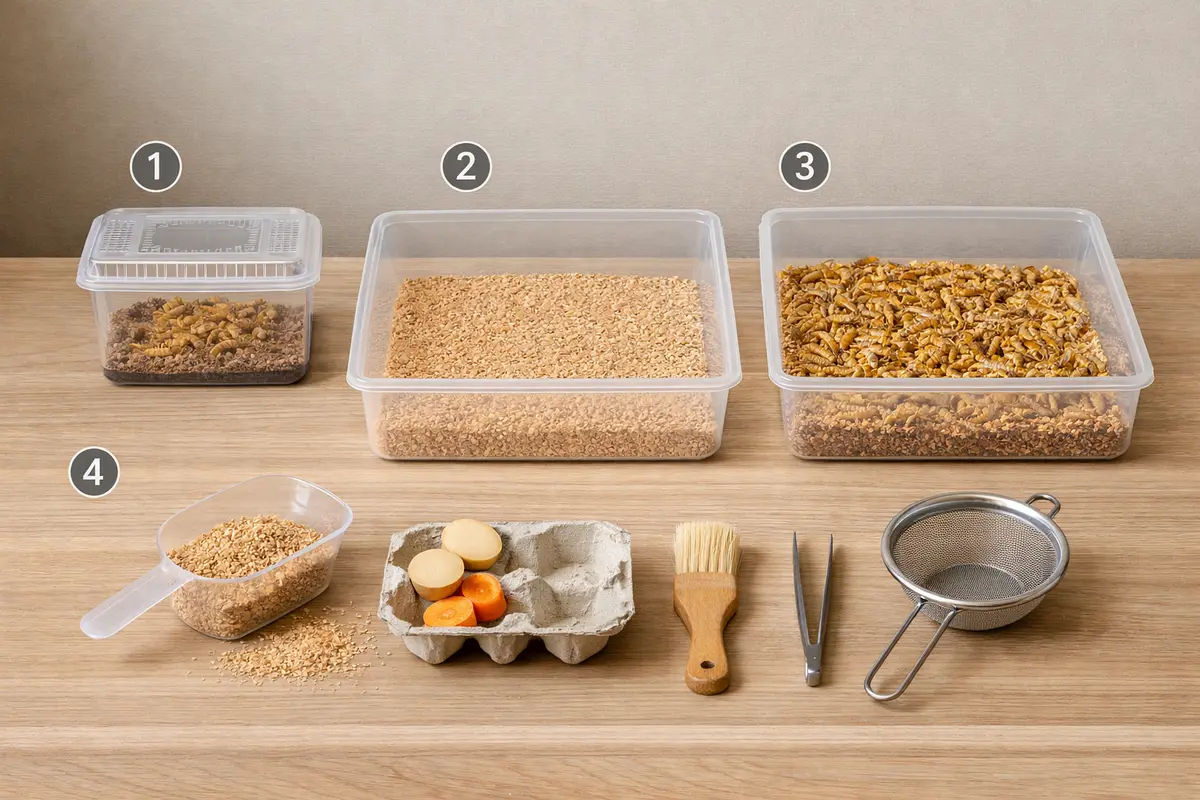
Mealworm Feed Ratio Guide for Beginners
Feeding mealworms the right way is the key to fast growth, lower mortality, and better production. The feed ratio determines how quickly your colony grows and how healthy your worms remain. This guide explains how much feed to use, how often to add moisture, and how to manage trays properly. Proper tray setup is only one part — knowing correct diet ratios. Correct feeding works best with proper setup explained in Mealworm Tray Setup Guide.
- Primary Feed: Wheat Bran
Wheat bran is the main diet for mealworms. It provides carbohydrates and helps maintain a dry, clean environment.
Recommended feeding ratio:
• 2 kg wheat bran per 1 kg mealworms
or
• 1.5 to 2 inches bran depth per tray
Always use dry, clean bran with no smell or fungus.
- Moisture Feed (Hydration Source)
Mealworms do not drink water directly. They get hydration from moisture-rich vegetables.
Best moisture foods:
• Carrots
• Potatoes
• Pumpkin slices
• Apple slices (in low quantity)
Moisture ratio:
• For a medium tray: 2–3 small carrot pieces
• Replace every 2–3 days
Do not overfeed moisture. Excess moisture creates fungal growth.
- How Often to Add Dry Feed
Mealworms consume bran slowly. Fresh bran should be added when:
• Bran level becomes thin
• Moisture feed dries quickly
• Worms start clustering on the surface (sign of low feed)
General rule:
• Add fresh bran every 12–15 days
• During cleaning cycle, shift worms into completely new bran
- Feed Ratio for Beetles
Beetles require less feed compared to larvae.
Recommended ratio:
• 1.5 kg bran per tray of beetles
• Moisture: Very small amount (1–2 carrot slices)
Beetles should not receive heavy moisture; it increases smell and fungus.
For poultry feed production, understanding how to start a mealworm farm for chickens helps ensure consistent protein supply.
- Feed Ratio for Different Growth Stages
Stage Dry Feed (Bran) Moisture Feed
Small larvae 1 inch bran Very small carrot slices
Medium larvae 1.5–2 inches bran Moderate moisture
Large larvae 2 inches bran More frequent moisture
Beetles Thin bran layer (1 inch) Minimal moisture only
- Feed Storage Tips
Proper feed storage improves colony health.
• Store bran in a dry, airtight container
• Keep away from moisture and insects
• Avoid storing bran on the floor
• Check for mites or fungus before using
Clean feed = healthy worms.
- Signs of Wrong Feed Ratio
If the feed ratio is incorrect, these signs will appear:
• Worms gathering on moisture food excessively
• Smell developing in the tray
• Worms turning dark or drying out
• Slow growth
• Fungal spots in bran
If these appear, review your feed levels and moisture frequency.
Conclusion
A good feed ratio keeps your mealworms healthy and productive. For a complete diet overview, read Mealworm Feeding Guide. The combination of dry bran and controlled moisture is the foundation of successful mealworm farming. With the right balance, you can improve growth speed, reduce mortality, and maintain a clean farming environment.