
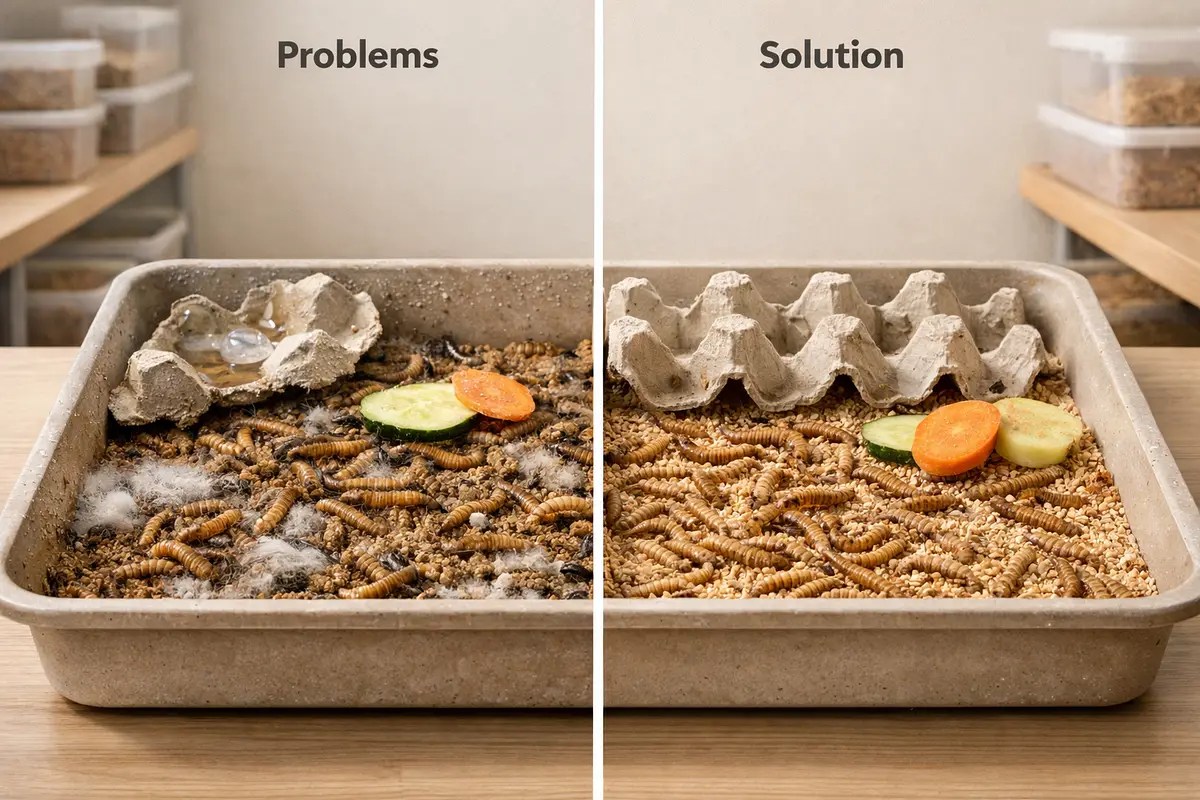
Mealworm Farming Troubleshooting Guide for Beginners
Even with a good setup, mealworm farmers sometimes face problems like slow growth, bad smell, fungus, or sudden mortality. Most of these issues are easy to fix once you know the cause. This guide explains the most common mealworm farming problems and their simple solutions. Many problems start with incorrect feeding, so review our Mealworm Feed Ratio Guide.
- Slow Growth of Mealworms
Symptoms:
• Worms staying small for weeks
• Very light color
• Low activity
Causes:
• Low temperature
• Poor-quality bran
• Not enough moisture feed
• Overcrowded trays
Solutions:
• Keep temperature between 24–28°C
• Add fresh, clean wheat bran
• Provide carrot or potato slices every 2–3 days
• Reduce worm density (shift to another tray)
- Bad Smell in Trays
Symptoms:
• Strong odor
• Wet or clumped bran
• Worms gathering on surface
Causes:
• Too much moisture feed
• Poor airflow
• Fungus in bran
• Old or dirty trays
Solutions:
• Reduce moisture amount
• Increase airflow, avoid airtight lids
• Remove wet bran and replace with fresh dry bran
• Clean trays every 12–15 days
- Sudden Worm Death
Symptoms:
• Many dead worms
• Worms turning dark or dried
• No movement
Causes:
• High temperature (overheating)
• Toxic or expired bran
• Contamination with chemicals or sprays
• Mites or pests
Solutions:
• Keep trays away from sunlight and heat
• Use fresh, clean bran
• Never spray chemicals near trays
• Deep clean the room and replace all bran
- Worms Turning Black or Hard
Symptoms:
• Hard, black worms
• Slow movement before death
Causes:
• Lack of moisture feed
• Overcrowding
• Sudden temperature drops
Solutions:
• Add carrots/potatoes on schedule
• Increase tray space
• Maintain stable temperature
- Beetles Dying Quickly
Symptoms:
• Beetles dying before laying enough eggs
• Low production
Causes:
• High humidity
• Too much moisture food
• Beetles kept with large worms
• Rough handling
Solutions:
• Keep humidity below 60%
• Give very little moisture feed
• Separate beetles from large worms
• Handle beetles gently with soft brushes
Many beginners ask about the complete process, which is clearly explained in our How to Start Mealworm Farming guide.
- Fungus or Mold in Trays
Symptoms:
• Green or white spots
• Wet patches in bran
• Worms climbing away from feed
Causes:
• Too much moisture food
• Poor ventilation
• Dirty room
Solutions:
• Reduce moisture slices
• Spread airy, dry wheat bran
• Improve airflow in room
• Remove bad bran immediately
- Pupae Turning Black or Not Developing
Symptoms:
• Pupae getting dark
• Not turning into beetles
Causes:
• Too much handling
• Kept with worms (worms eat weak pupae)
• Low temperature
Solutions:
• Separate pupae into a dedicated tray
• Avoid handling too much
• Keep temperature stable
- Mites or Tiny Insects in Trays
Symptoms:
• Dust-like moving insects
• Worms stressed or inactive
Causes:
• High humidity
• Contaminated bran
• Poor cleaning habits
Solutions:
• Freeze bran for 24 hours before use
• Reduce humidity
• Deep clean trays and room
• Replace all feed if infestation spreads
Conclusion
Most mealworm farming problems have simple solutions. If you’re just starting out, follow How to Start Mealworm Farming to avoid common mistakes. By maintaining clean trays, controlling temperature, managing moisture properly, and using fresh feed, you can prevent almost all common issues. With small improvements, your colony will stay healthy and productive throughout the year.