Introduction
Mealworm farming is becoming increasingly popular among hobbyists, small farmers, bird breeders, and poultry enthusiasts who want a sustainable and affordable source of high-protein feed. Mealworms, the larvae of the darkling beetle (Tenebrio molitor), are widely used as feed for birds, poultry, fish, reptiles, and other animals.
One of the biggest advantages of mealworm farming is that it does not require large agricultural land. Unlike traditional livestock farming, mealworms can be raised indoors in trays stacked on racks. This means even a small room can support a productive colony.
However, beginners often ask important questions such as:
- How much space is required for mealworm farming?
- How many trays can fit in one square meter?
- How many mealworms can one person manage at home?
- What is the best bedding for mealworms?
- What is the best way to store harvested mealworms?
This guide explains the mealworm farming space requirement per square meter, including tray systems, bedding options, storage methods, and management capacity for hobbyist and home-scale farming systems.
Understanding Home-Scale Mealworm Farming
Home-scale mealworm farming refers to small production systems usually operated by individuals or families. These systems are commonly used by:
- hobbyist insect farmers
- bird breeders
- backyard poultry keepers
- reptile hobbyists
- small pet feed suppliers
In home systems, mealworms are typically raised in plastic trays placed on shelving racks. Because trays can be stacked vertically, farmers can use vertical space efficiently.
This stacking method allows a large number of colonies to be managed even in small indoor areas.
Mealworm Farming Space Requirement per Square Meter
One square meter of floor space can support a surprisingly large mealworm production system if trays are organized vertically.
Basic Tray System
A typical tray used for mealworm farming is approximately:
- length: 60 cm
- width: 40 cm
- depth: 8–10 cm
These trays can easily fit into shelving racks.
Rack Layout per Square Meter
A standard rack system may contain:
- 5 to 8 vertical shelves
- each shelf holding 2 trays
This means a single rack can hold 10–16 trays within about one square meter of floor space.
Example Calculation
If one tray contains around:
- 5,000 to 10,000 mealworms
Then one square meter rack system may hold:
50,000 to 150,000 mealworms depending on tray density.
This shows why mealworm farming is considered a space-efficient insect farming system.
Hobbyist Mealworm Farming Space Planning
Most beginners start with small systems to learn colony management before expanding production.
Small Hobby Setup
A hobbyist setup may use:
- 3 to 5 trays
- small shelving rack
- one indoor corner
Required space:
0.5 to 1 square meter
Production potential:
- enough mealworms for bird breeding or backyard poultry feeding.
Medium Home System
A medium home system may include:
- 10 to 20 trays
- 2 vertical racks
Space required:
1–2 square meters
This size system can supply mealworms for:
- bird breeders
- small pet stores
- aquarium fish feeding.
Large Home-Scale System
Some hobbyists expand to larger home systems.
Example:
- 40–60 trays
- multiple racks
Space required:
3–5 square meters
This size system may produce enough mealworms to sell to local buyers.
Management Capacity per Person
Another important factor in mealworm farming is management capacity per person.
Unlike traditional livestock farming, mealworm colonies require relatively low daily labor.
Typical Work Activities
Daily tasks include:
- feeding vegetables
- checking moisture levels
- removing dead insects
- separating pupae and beetles
- harvesting mature mealworms
Person Capacity Estimate
One person can typically manage:
- 30–50 trays easily as a hobby system
- 100 trays with good organization
Time required:
- 1 to 2 hours per day.
This makes mealworm farming suitable for:
- students
- part-time farmers
- home entrepreneurs.
Mealworm Bedding Options
Mealworm bedding serves two purposes:
- Food source
- Living substrate
Choosing the right bedding is essential for colony health.
Wheat Bran (Most Common)
Wheat bran is the most widely used bedding material.
Advantages:
- inexpensive
- widely available
- high nutritional value
- easy to manage
Many farms in Pakistan use gandum ka chokar (wheat bran) for mealworm bedding.
Oat Bran
Oat bran is another option used in some farms.
Benefits:
- soft texture
- good nutrition
However, it may be more expensive in some regions.
Mixed Grain Substrate
Some farmers use mixtures such as:
- wheat bran
- cornmeal
- crushed oats
These mixes can improve nutrition but must remain dry to prevent mold.
Important Bedding Tips
To maintain healthy bedding:
- keep substrate dry
- replace bedding regularly
- avoid wet vegetables mixing into bedding
- remove mold immediately
Clean bedding prevents colony diseases and improves growth.
Moisture Sources for Mealworms
Mealworms do not drink water directly. Instead, they obtain moisture from vegetables.
Common moisture sources include:
- carrots
- potatoes
- cucumbers
- pumpkin
Vegetables should be added in small pieces and replaced frequently to prevent mold.
Best Way to Store Mealworms
Once mealworms reach harvest size, farmers often need to store them temporarily.
There are several storage methods depending on usage.
Refrigeration Storage
Refrigeration is the most common method.
Temperature:
4–10°C
Benefits:
- slows metabolism
- keeps mealworms alive longer
- reduces feeding requirements
Mealworms can remain alive in refrigeration for several weeks.
Short-Term Storage at Room Temperature
If mealworms will be used quickly, they can be kept at room temperature.
However:
- they will continue growing
- they will eventually pupate
This method is suitable only for short-term storage.
Drying Mealworms
Some farmers dry mealworms for long-term storage.
Drying methods include:
- sun drying
- oven drying
- dehydrator drying
Dried mealworms can be stored for months and are commonly used as poultry feed.
Mealworm Buyers and Market Opportunities
As awareness about insect protein grows, demand for mealworms is increasing in several markets.
Common buyers include:
- bird breeders
- aquarium fish farms
- reptile keepers
- exotic pet shops
- poultry hobbyists
In Pakistan, small mealworm farms often sell products through:
- local pet markets
- online marketplaces
- bird breeding communities
Some farmers also sell dried mealworms as animal feed supplements.
Scaling a Home-Scale Mealworm Farm
Once a hobbyist system becomes stable, farmers often expand production gradually.
Steps for expansion:
- add more trays
- separate breeding colonies
- improve rack systems
- organize harvesting schedules
Expansion should always be gradual to maintain colony health.
Sustainable Protein Production
Mealworm farming is part of the growing field of insect protein production.
Compared to traditional livestock, insects require:
- less land
- less water
- less feed
This makes insect farming an interesting option for sustainable agriculture.
Because of their efficient growth and nutritional value, mealworms are considered one of the most promising insect species for animal feed production.
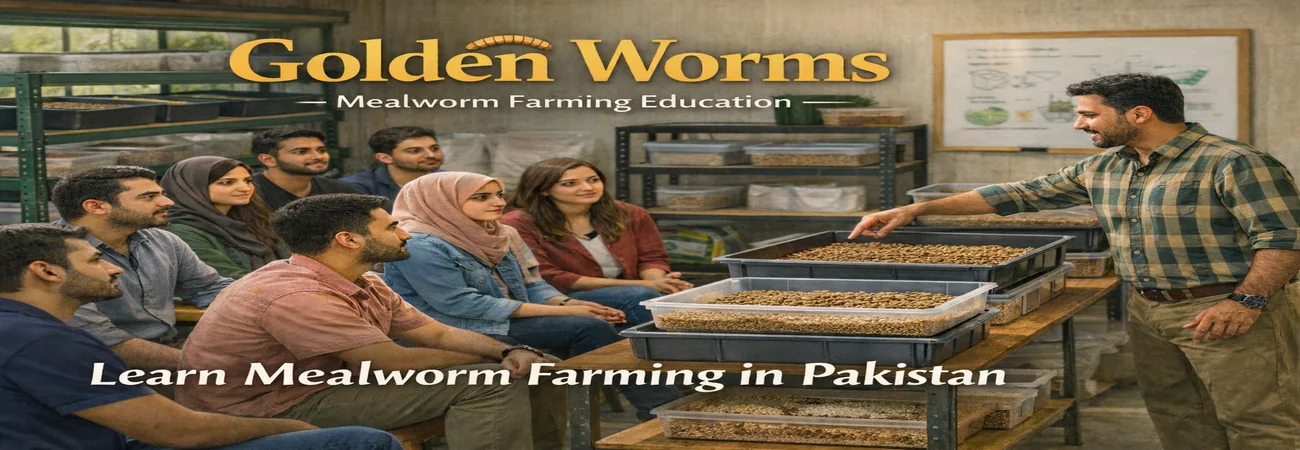
About Golden Worms
Golden Worms is an educational platform dedicated to sharing practical knowledge about mealworm farming. The goal of the platform is to help beginners understand how mealworm colonies work and how insect farming systems can be developed responsibly.
By providing clear guides on colony management, feeding systems, and market opportunities, Golden Worms aims to support farmers, hobbyists, and researchers interested in sustainable insect farming.
Final Thoughts
Mealworm farming is one of the most space-efficient agricultural activities available today. With a well-organized tray system, a single square meter of space can support tens of thousands of mealworms.
For hobbyists and beginners, starting with a small system is the best way to learn colony management before expanding production. By understanding tray systems, bedding options, and storage methods, farmers can maintain healthy colonies and produce high-quality mealworms.
As interest in insect protein continues to grow worldwide, small home-scale systems may become an important entry point for farmers exploring sustainable feed production.