How Mealworms Farming Works: A Complete Beginner’s Guide
Mealworms farming is gaining attention as a practical and sustainable method of producing high-protein animal feed. Many beginners are interested in this farming method because it can be started on a small scale and does not require complex equipment.
This guide explains how mealworms farming works and common problems in mealworms farming, from understanding the insect life cycle to setting up a basic farm and avoiding common beginner mistakes. No prior farming experience is required.
What Are Mealworms?
Mealworms are the larval stage of the darkling beetle. They are commonly used as feed for poultry, fish, birds, and reptiles because of their high protein and fat content.
Despite their name, mealworms are not worms. They are insects that go through a complete life cycle before becoming beetles.
The Mealworms Life Cycle Explained
Understanding the life cycle is essential for successful farming.
Egg Stage
Adult beetles lay very small eggs in the bedding material. These eggs usually hatch within 7 to 14 days under suitable conditions.
Larva (Mealworm) Stage
This is the stage most farmers focus on. Larvae feed on bran or similar materials and grow gradually. This stage can last several weeks, depending on temperature and feed quality.
Pupa Stage
When fully grown, mealworms turn into pupae. During this stage, they do not eat. Pupae later transform into adult beetles.
Beetle Stage
Adult beetles reproduce and lay eggs, starting the cycle again.
Maintaining all stages properly ensures continuous production.
Basic Mealworms Farming Setup
Mealworms farming can be done at home or in small spaces.
Containers and Trays
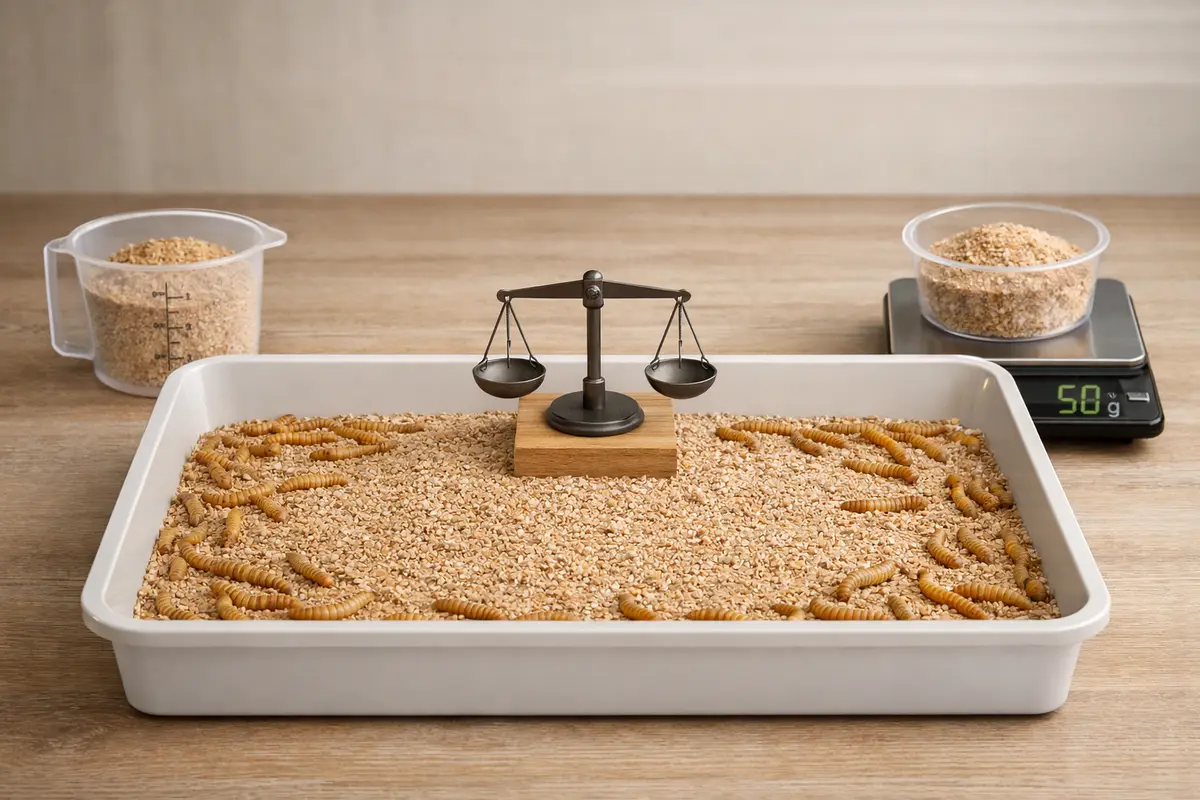
Plastic trays or boxes are commonly used. These should be shallow, well-ventilated, and easy to clean.
Bedding and Feed
Wheat bran is widely used as both bedding and feed. It provides nutrition and allows mealworms to burrow naturally.
Moisture Source
Vegetables like carrots or potatoes are used to provide moisture. Water should never be added directly to the trays.
Environmental Conditions
Temperature
Mealworms grow best in warm conditions, generally between 25°C and 30°C. Growth slows significantly in colder environments.
Humidity
Excess moisture can cause mold. Trays should remain dry, and moisture sources should be controlled carefully.
Light and Ventilation
Mealworms prefer dark environments with good airflow. Direct sunlight should be avoided.
Feeding and Growth Timeline
Mealworms are usually fed bran continuously. Moisture sources are added in small quantities and replaced regularly.
Under good conditions:
- Small larvae grow steadily over several weeks
- Fully grown mealworms can be harvested before pupation
- Part of the population should be left to develop into beetles
This balance ensures long-term production.
Harvesting Mealworms
Mealworms are typically harvested when they reach full size but before turning into pupae. They are separated using simple sieves or by hand.
Harvesting should be done carefully to avoid disturbing eggs and smaller larvae.
Common Beginner Mistakes
Many beginners face issues due to avoidable mistakes:
- Overwatering trays
- Poor ventilation
- Mixing all life stages together without separation
- Using contaminated or wet feed
- Ignoring temperature control
Learning from these mistakes early helps maintain a healthy farm.
Is Mealworms Farming Suitable for Beginners?
Mealworms farming is considered beginner-friendly because:
- It requires low initial investment
- Space requirements are minimal
- Daily maintenance is manageable
- The farming process is predictable once learned
However, patience and consistency are important for success.
Conclusion
Mealworms farming works by managing the natural life cycle of the darkling beetle in a controlled environment. With proper setup, feeding, and environmental control, beginners can successfully raise mealworms for animal feed purposes.
Understanding the basics on mealworms as animal feed, avoiding common mistakes, and maintaining consistency are key factors in building a sustainable mealworms farming system.