Common Problems in Mealworms Farming and How to Avoid Them
Mealworms farming is generally simple, but beginners often face problems that affect growth, survival, and productivity, see basic mealworms farming setup for detail. Most of these issues are not caused by complex factors but by small mistakes in environment control, feeding, or hygiene.
This article explains the most common problems in mealworms farming and provides practical guidance on how to avoid them.
Mold Growth in Trays
The Problem
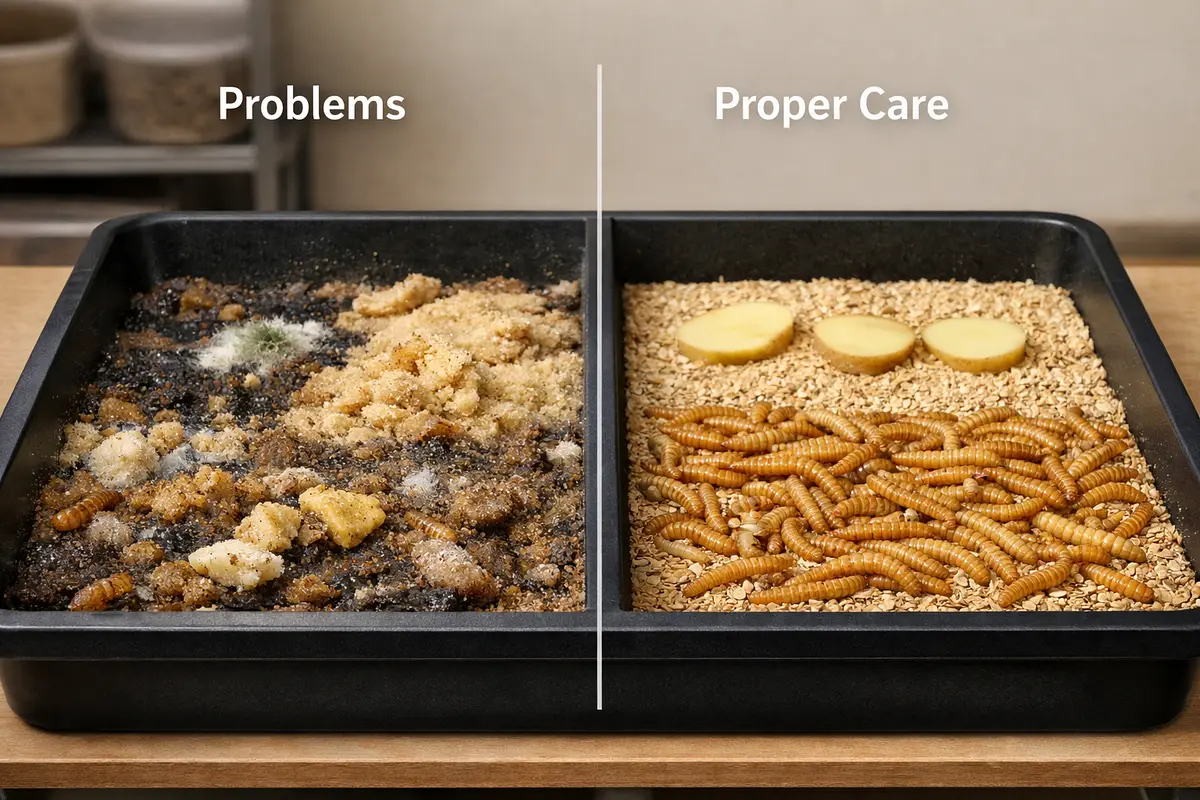
Mold is one of the most common issues in mealworms farming. It usually appears as white or green patches in the feed or bedding.
Why It Happens
- Excess moisture
- Wet vegetables left too long
- Poor airflow
- High humidity
How to Avoid It
- Never add water directly to trays
- Use small pieces of vegetables for moisture
- Remove leftover vegetables within 24 hours
- Keep trays dry and well-ventilated
Maintaining dryness is the most effective way to prevent mold.
Mite Infestation
The Problem
Mites are tiny pests that compete with mealworms for food and space. Severe infestations can reduce growth and cause mortality.
Why It Happens
- Old or contaminated feed
- High humidity
- Poor tray hygiene
How to Avoid It
- Use clean, dry bran
- Sift trays regularly to remove waste
- Keep humidity low
- Clean or replace trays periodically
Early detection makes mite control much easier.
Slow Growth Rate
The Problem
Mealworms may grow very slowly or remain small for long periods.
Why It Happens
- Low temperature
- Poor-quality feed
- Overcrowding
How to Avoid It
- Maintain warm temperatures (around 25–30°C)
- Use fresh, nutritious bran
- Avoid overcrowding trays
- Separate mealworms by size when possible
Growth speed improves significantly under proper conditions.
High Mortality in Mealworms
The Problem
Large numbers of mealworms die unexpectedly.
Why It Happens
- Excess moisture
- Poor ventilation
- Sudden temperature changes
- Mold or mites
How to Avoid It
- Keep environment stable
- Avoid placing trays near heat sources or cold drafts
- Monitor trays regularly
- Remove dead insects promptly
Consistency in conditions is critical for survival.
Pupae or Beetles Being Eaten
The Problem
Mealworms may eat pupae, and beetles may damage eggs if all stages are kept together.
Why It Happens
- Mixed life stages in one tray
- Lack of separation
How to Avoid It
- Separate larvae, pupae, and beetles into different trays
- Handle pupae carefully
- Provide enough space for each stage
Stage separation improves reproduction and output.
Bad Smell From Trays
The Problem
An unpleasant smell develops around the trays.
Why It Happens
- Mold growth
- Dead insects not removed
- Wet feed
How to Avoid It
- Remove waste and dead insects regularly
- Keep feed dry
- Improve airflow
- Reduce moisture sources
A healthy mealworms farm should not produce strong odors.
Feed Contamination
The Problem
Mealworms stop feeding or die due to contaminated feed.
Why It Happens
- Using old or damp bran
- Storing feed improperly
How to Avoid It
- Store feed in dry, sealed containers
- Replace bran when it becomes dusty or damp
- Avoid mixing old and new feed
Clean feed supports healthy growth.
Inconsistent Production
The Problem
Mealworms production becomes irregular or unpredictable.
Why It Happens
- Poor life cycle management
- Too many mealworms harvested
- Insufficient beetles for reproduction
How to Avoid It
- Always maintain breeding beetles
- Allow part of the population to pupate
- Plan harvesting carefully
Balanced management ensures continuous production, which are using mealworms as feed in market.
Conclusion
Most problems in mealworms farming are caused by excess moisture, poor hygiene, or inconsistent environmental conditions. By keeping trays dry, feed clean, and life stages organized, beginners can avoid nearly all common issues.
Regular observation, small adjustments, and patience play a major role in maintaining a healthy and productive mealworms farming system.